Not a stronger version of the same artifact
Credentis does not ask the institution to trust a better returned code, prompt, or reusable approval token.

Credentis does not propose a different way to deliver the same approval artifact. It proposes a different basis for trusting that authorization is valid. The framework evaluates approval inside a live authorization event where identity, intent, and transaction context are brought into alignment before approval is accepted.
Why this belongs to a new authorization category
Credentis does not ask the institution to trust a better returned code, prompt, or reusable approval token.
A different route of delivery does not by itself change the basis of authorization confidence or the institution’s review posture.
The framework evaluates whether identity, intent, and transaction context align inside a live authorization event before approval is accepted.
Framework page 01
Cover
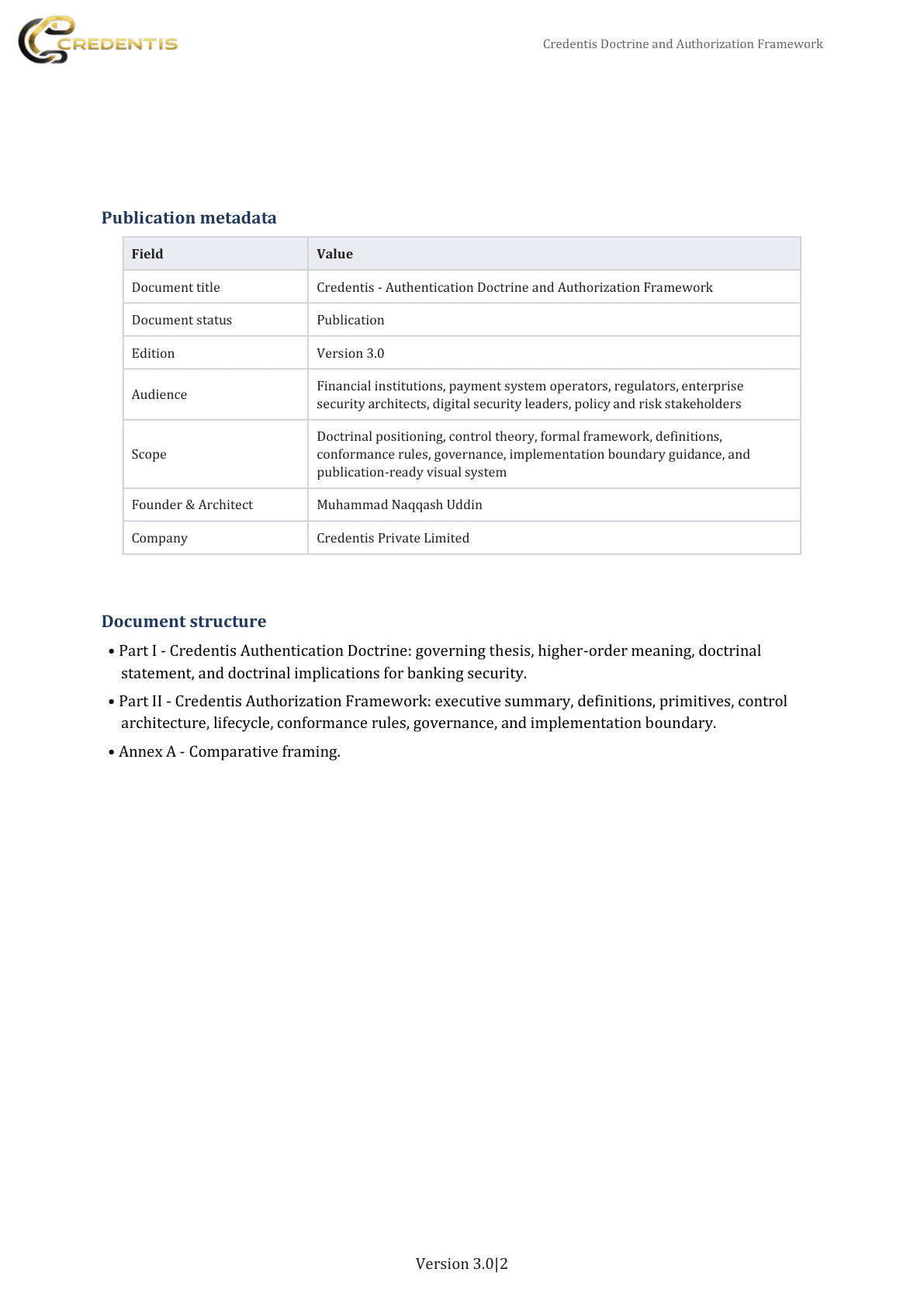
Framework page 02
Publication metadata
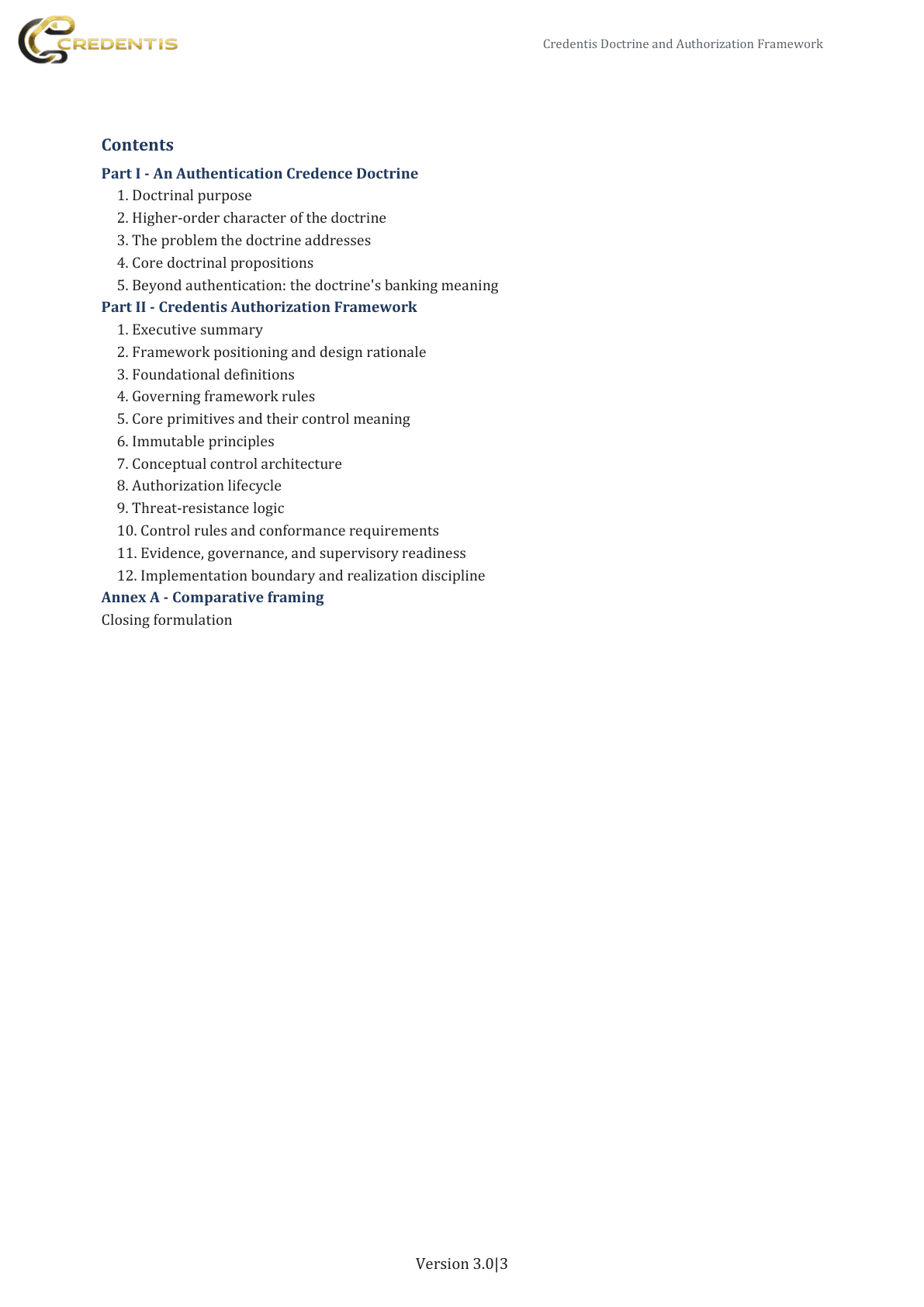
Framework page 03
Contents
Framework page 04
Part I — Doctrinal purpose and higher-order character

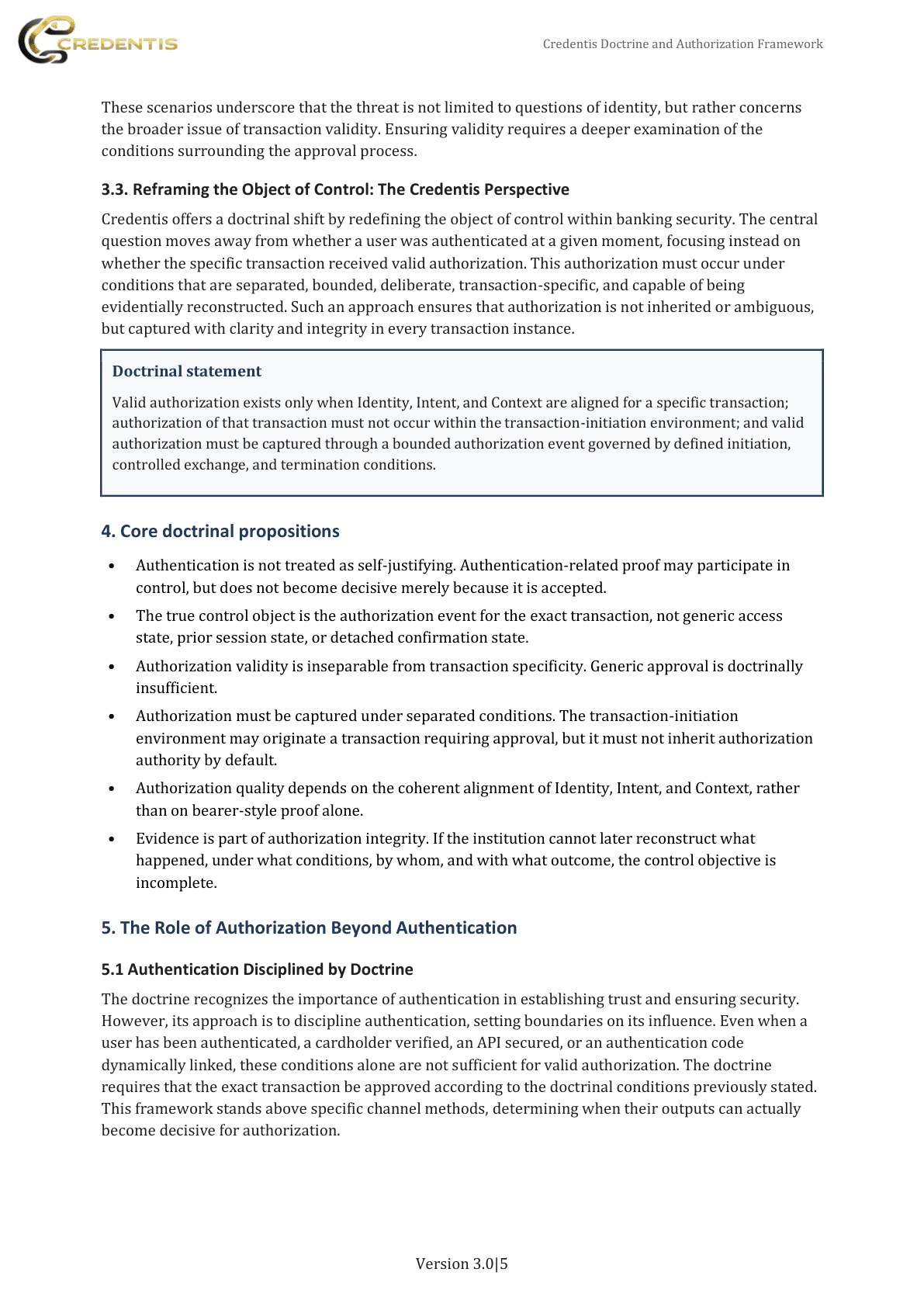
Framework page 05
Doctrinal statement and core propositions
Framework page 06
Authorization beyond authentication

Framework page 07
Part II — Executive summary and framework positioning
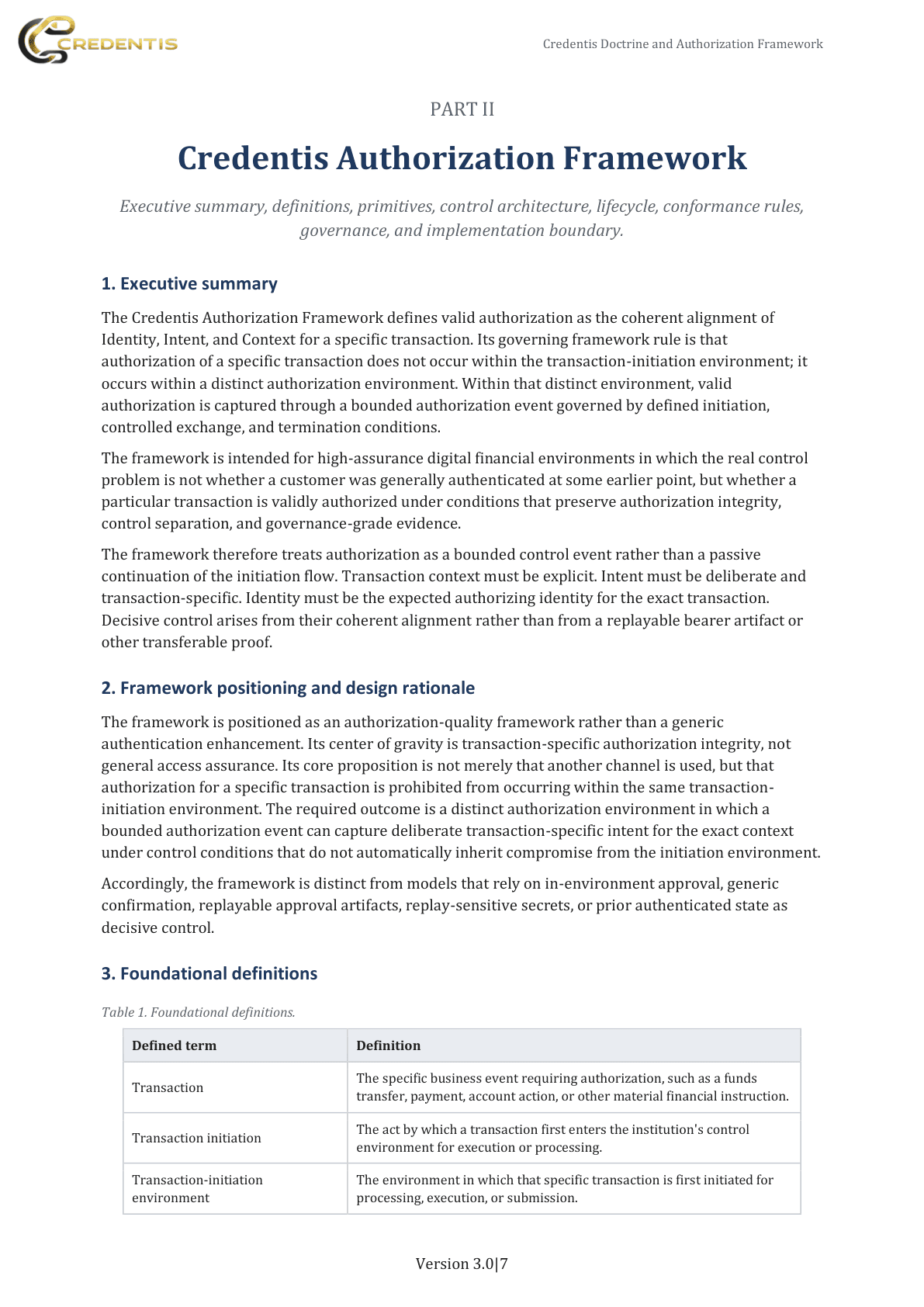
Framework page 08
Foundational definitions and governing framework rules
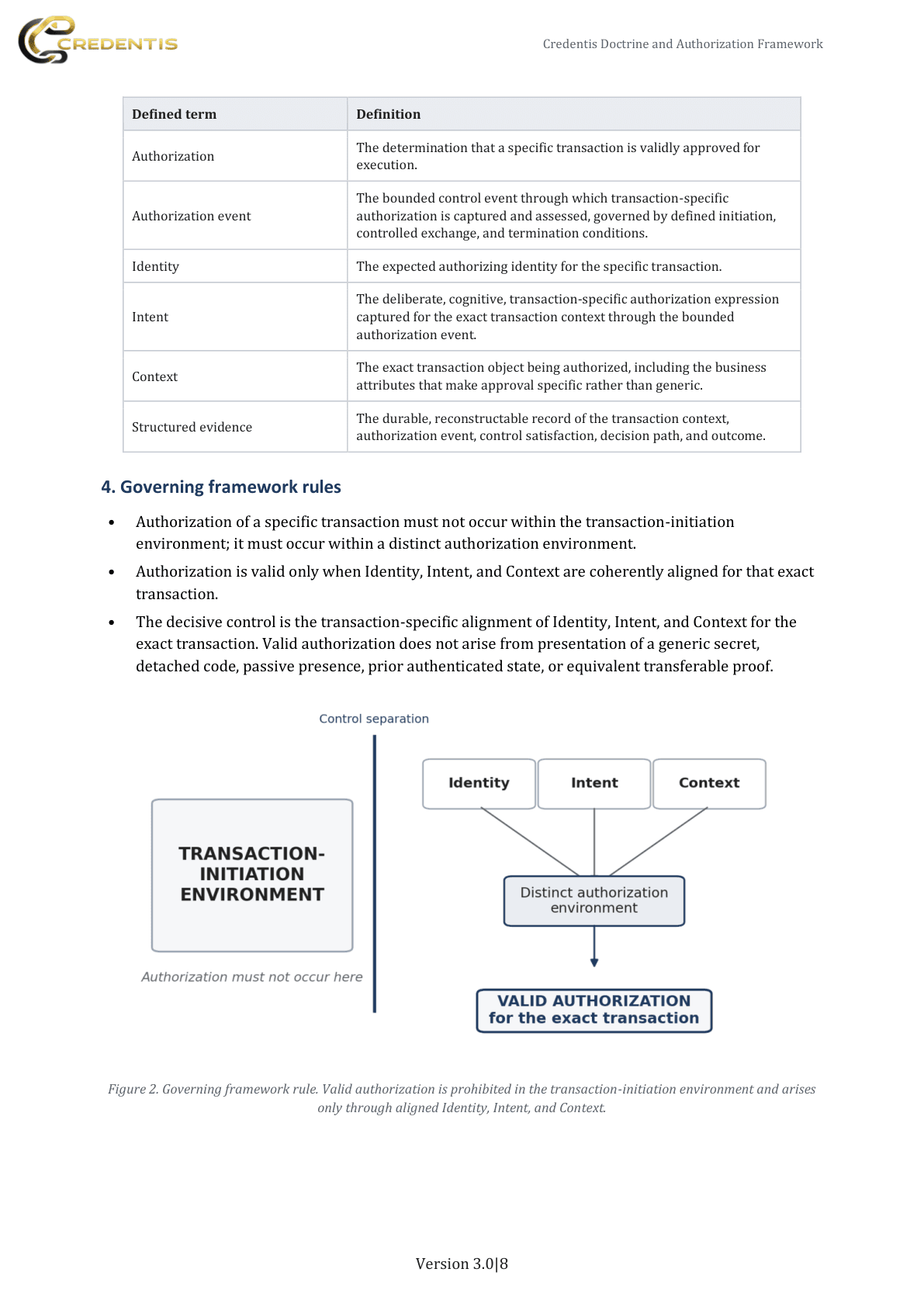
Framework page 09
Core primitives and immutable principles
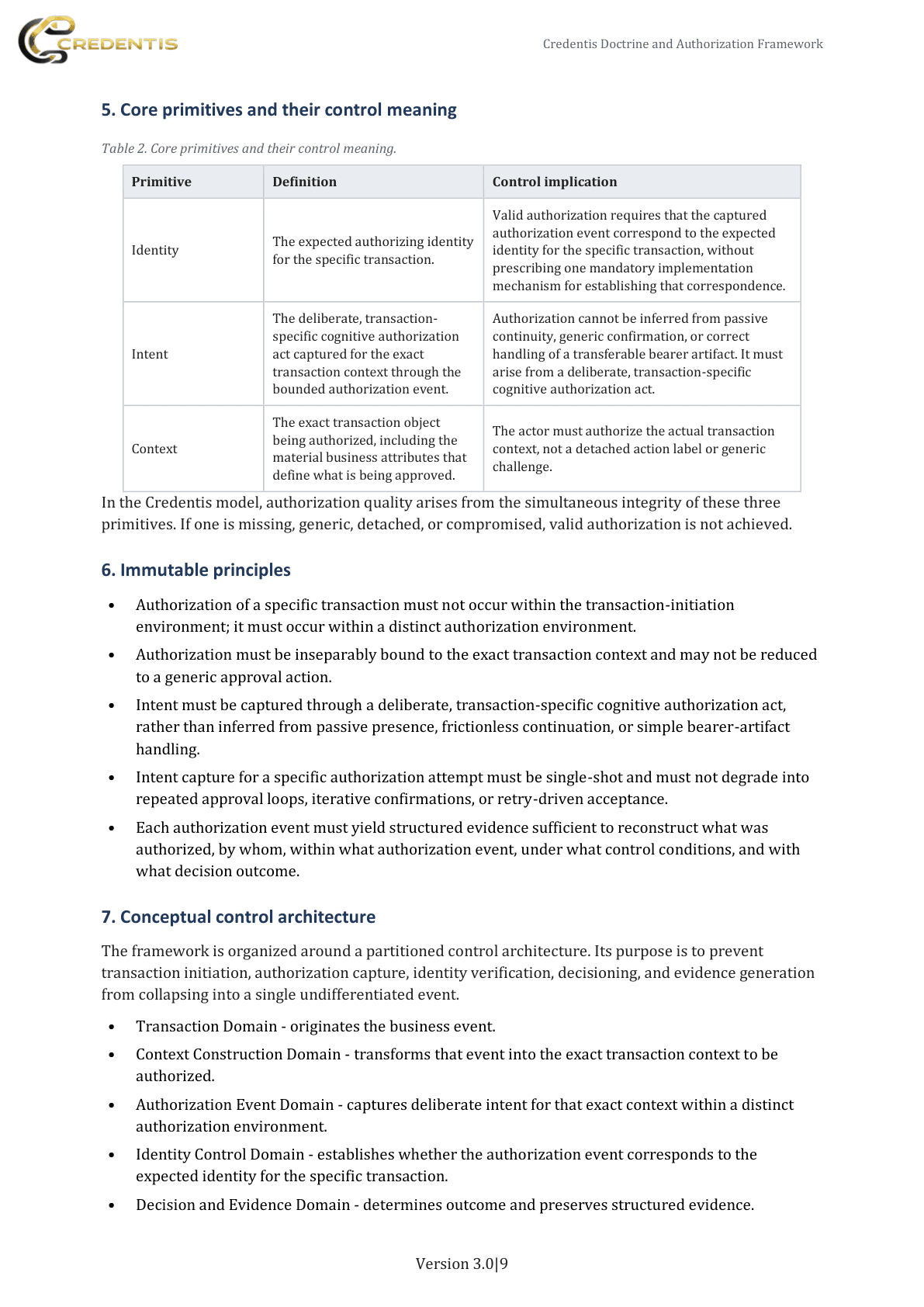
Framework page 10
Conceptual control architecture and authorization lifecycle
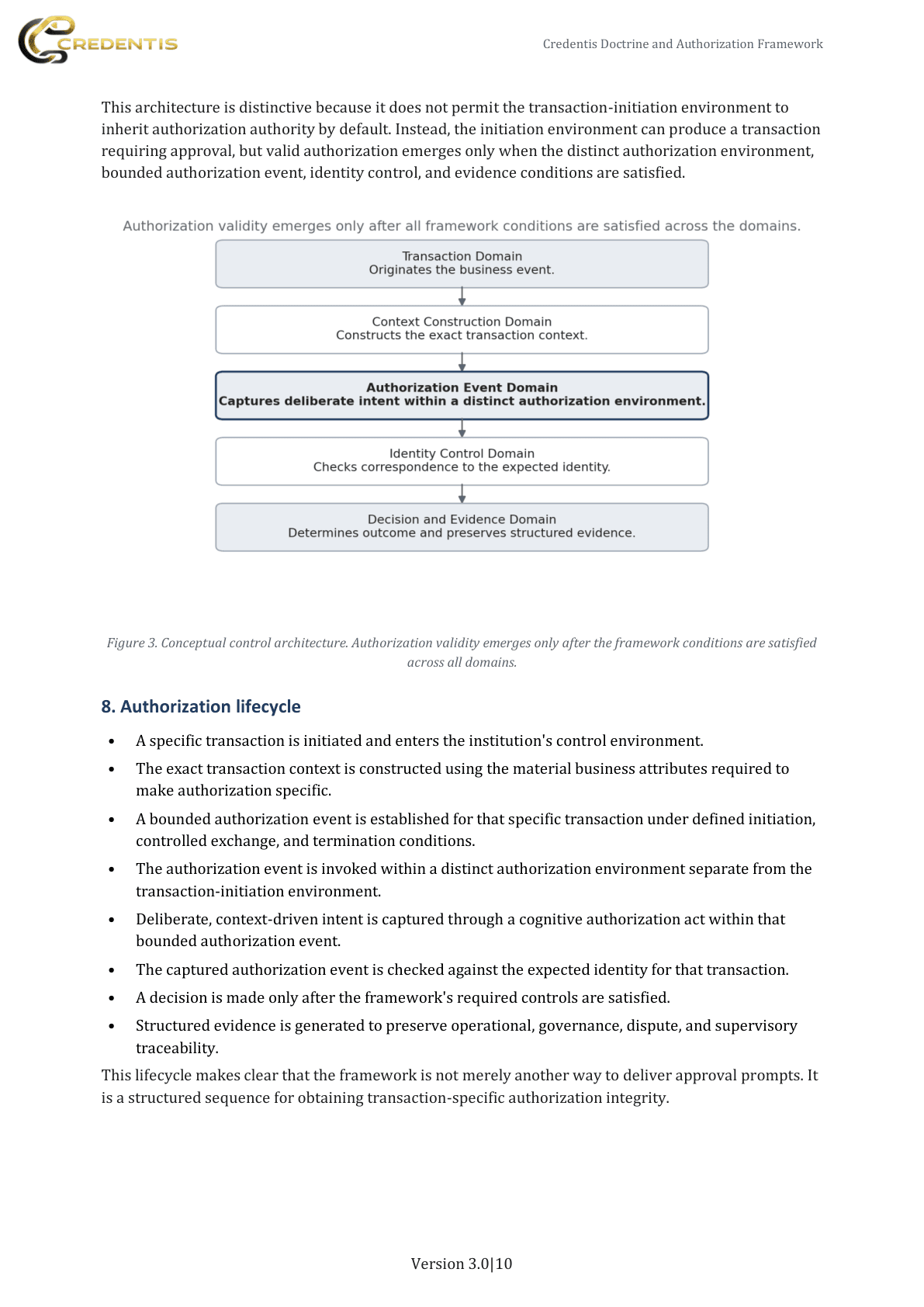
Framework page 11
Threat-resistance logic and conformance requirements
Framework page 12
Excluded non-conforming patterns and supervisory readiness
Framework page 13
Implementation boundary and realization discipline
Framework page 14
Annex A and closing formulation
