
Authorization and evidence
The authorization and evidence flow
The successful authorization sequence connects eligibility, authoritative identity verification, transaction authorization, evidence finalization, and bank confirmation.
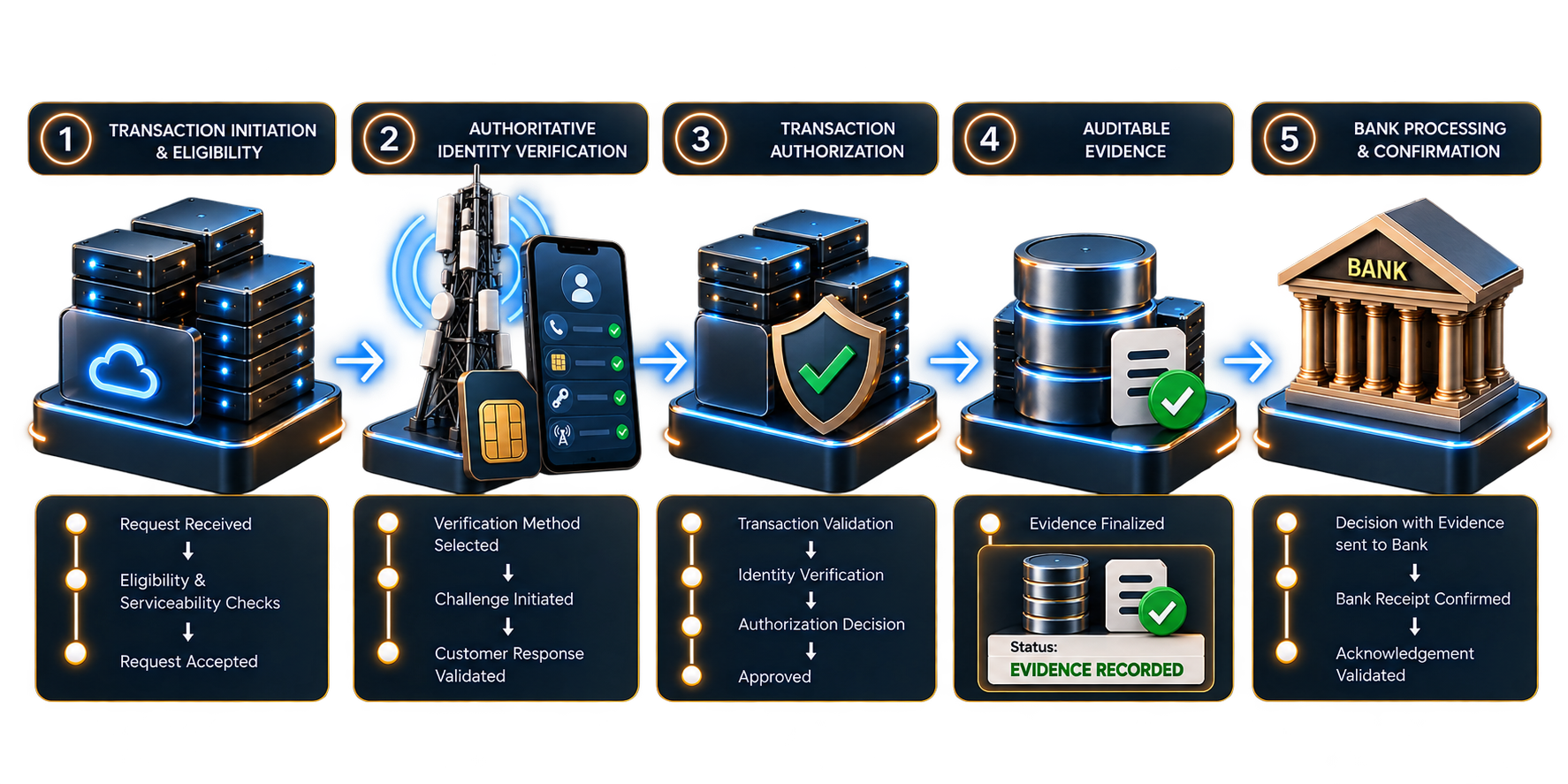
Transaction initiation & eligibility
- Request received
- Eligibility & serviceability checks
- Request accepted
Authoritative identity verification
- Verification method selected
- Challenge initiated
- Customer response validated
Transaction authorization
- Transaction validation
- Identity verification
- Authorization decision
- Approved
Auditable evidence
- Evidence finalized
- Evidence recorded
Bank processing & confirmation
- Decision with evidence sent to bank
- Bank receipt confirmed
- Acknowledgement validated
What the Authorization Records Contain
Structured authorization records link authoritative-token validation, the customer’s deliberate response, the transaction context, and the authorization decision.
Review the Decision and Evidence Together
The bank can review the authorization decision and the evidence supporting it together.
Reconstructability
Why Authorization Evidence Matters
If Credentis changes how the institution determines that a transaction was authorized, it must also produce evidence the institution can reconstruct, review, and defend.
Explain Every Authorization
The bank should be able to see what happened and why.
Credentis preserves the state transitions and decisions showing why a transaction was allowed, rejected, blocked, or failed. These records support operational review, review of authorization decisions and controls, audit, and investigation.
Lifecycle events
Created, sent, responded, blocked, rejected, expired, or approved, with timestamps and identifiers that link related authorization events.
Next step
Review Regulatory Compliance and Begin Institutional Inquiry
Regulatory Compliance explains how authorization evidence supports compliance review, audit, and dispute scrutiny. Institutional Inquiry allows a financial institution to begin evaluating Credentis.