Operational visibility
Monitor authorizations, outcomes and evidence.

PURPOSE-BUILT AUTHORIZATION INFRASTRUCTURE
A complete authorization layer for digital banking.
Dedicated deployment. Private connectivity. Secure bank integration. Real-time authorization operations. Evidence and institutional control.
Built as independent authorization infrastructure for each bank
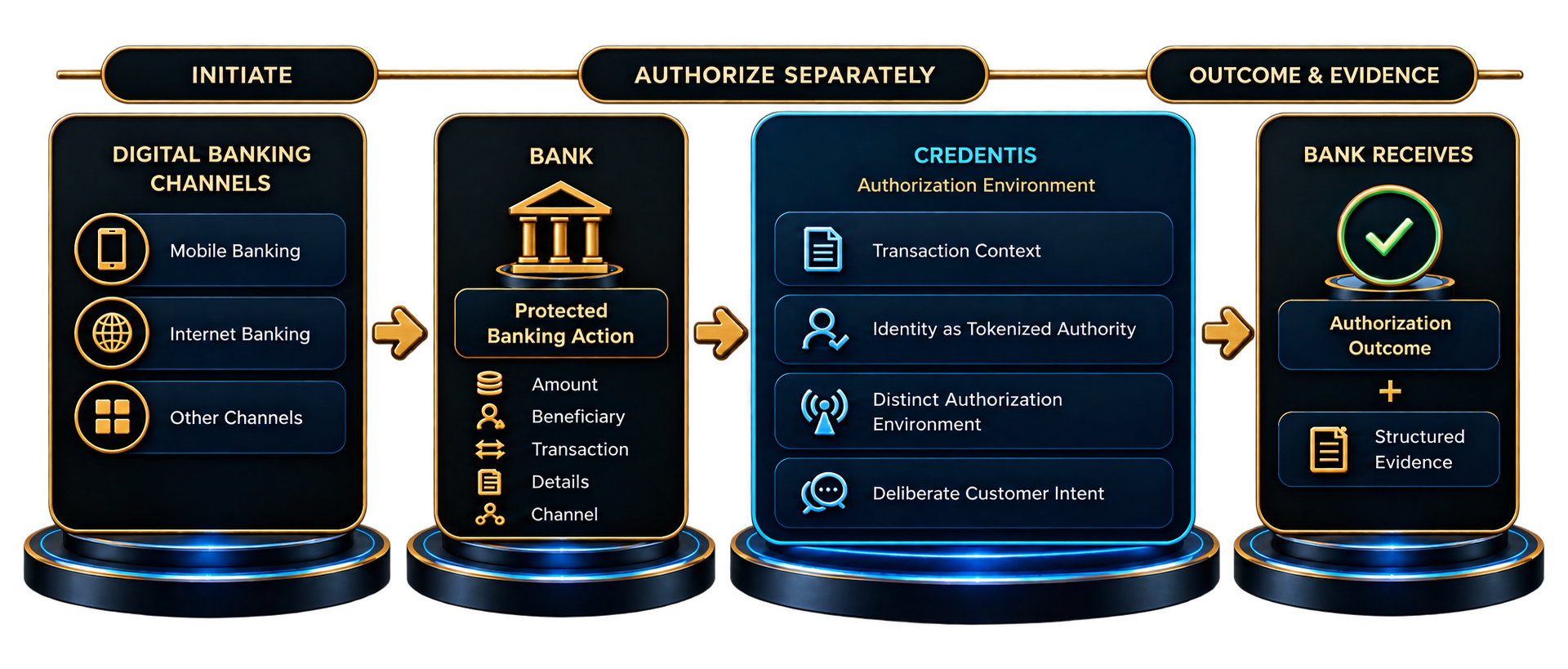
Layer positioning
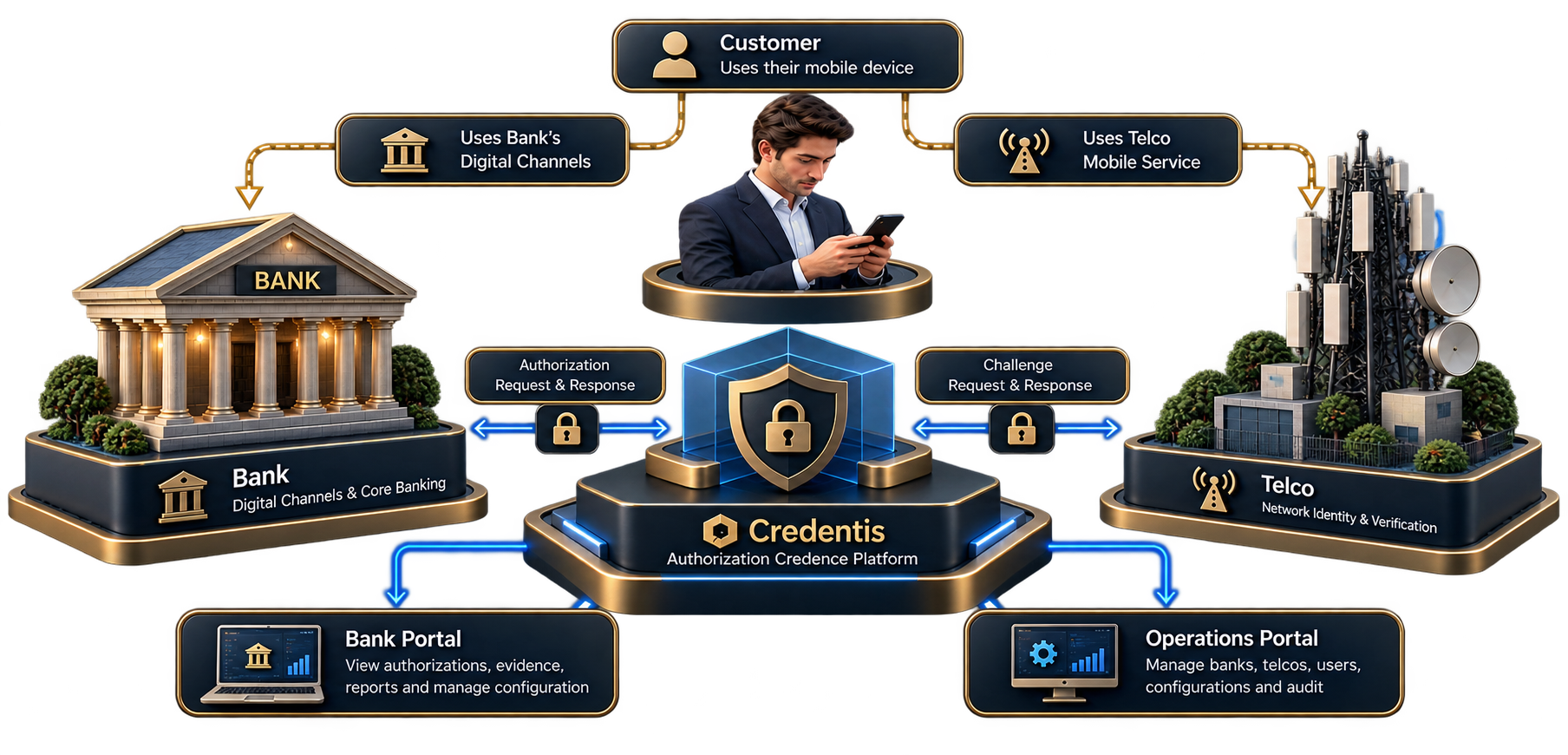
Digital channels and core banking initiate the banking action and exchange authorization requests and responses with Credentis.
The authorization platform connects the customer’s tokenized authority, deliberate intent, and transaction context through a separate authorization process.
Mobile-network identity and verification support sending an authorization challenge and receiving the customer’s response.
Authoritative identity
Secret-less authorization does not rely on a customer approval secret. Cryptographic protection remains part of the tokenized authority model.
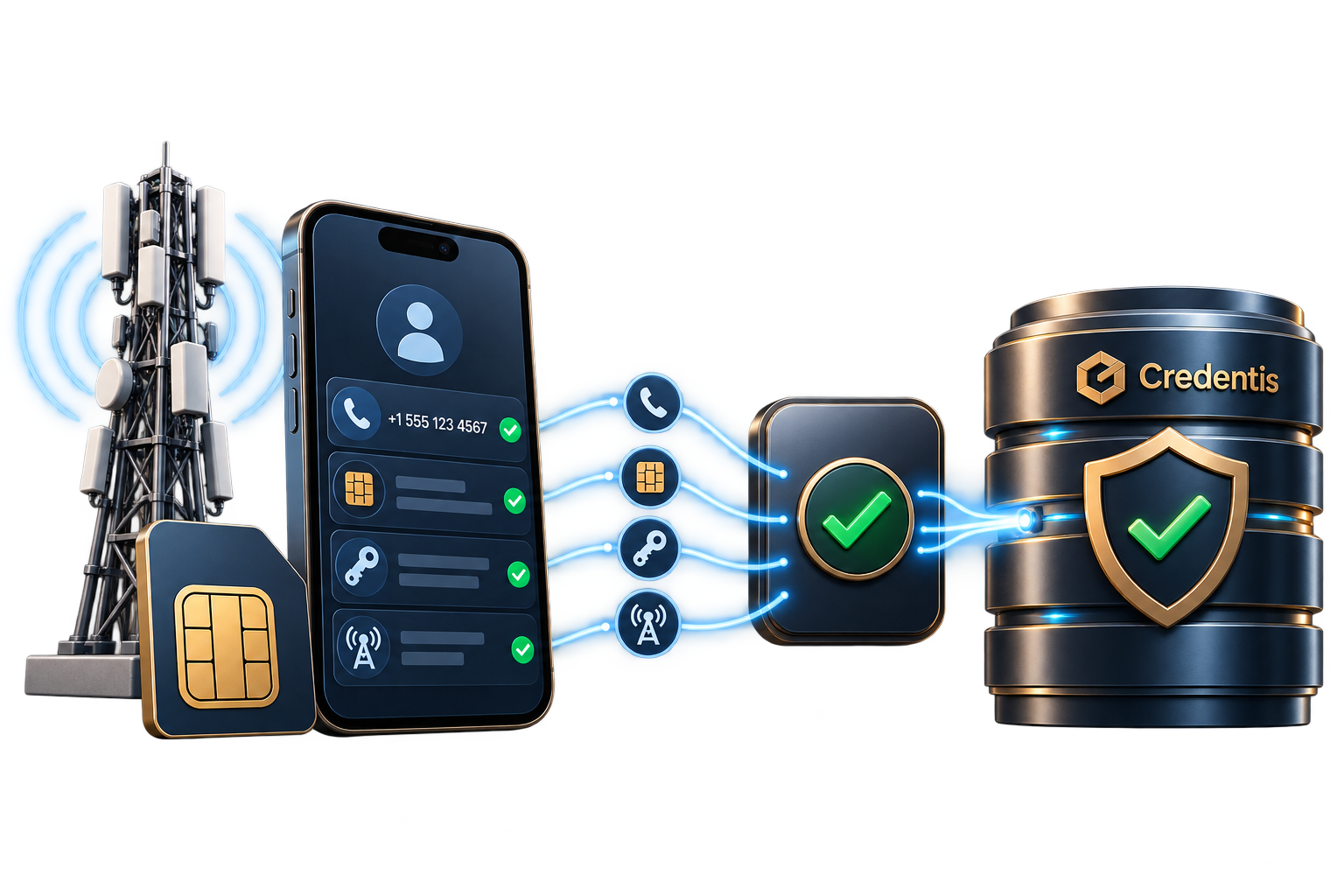

Biometric verification establishes the customer’s tokenized authority, which is retained for subsequent transaction authorization.
The authoritative token is validated per transaction. Identity, deliberate intent, and the transaction context come together at authorization.
Authorization stages
The successful authorization sequence connects transaction eligibility, authoritative identity verification, transaction authorization, auditable evidence, and bank confirmation.
View authorizations, evidence, and reports. Manage bank configuration.
Manage banks, telcos, users, configurations, and audit.
Bank Portal
Authorized users can view authorizations, evidence, and reports, and manage bank-specific settings.


Monitor authorizations, outcomes and evidence.
Manage bank-specific settings within controlled access.
Inspect retained Write-1 authorization records.
Review operational records and authorization outcomes.
Platform outcomes
The authorization lifecycle follows defined states and controls.
Decisions progress without unnecessary steps.
Recovery behavior is designed into the flow.
Controls protect each authorization event.
Operational information and authorization evidence remain visible.
Institutions retain control over their authorization policies.